
SAR PPE and Technical Clothing: Building Operator Safety
In a Search and Rescue mission, operator safety is not a secondary consideration; it is the technical prerequisite on which the entire effectiveness of the rescue depends. Before ever locating a casualty, operating a winch or stabilising an injured person, the rescuer must be able to rely on equipment that protects them, supports their movement, reduces fatigue and maintains consistent decision-making capacity.
That is why the personal equipment of the SAR operator must be understood as a coherent system, in which protective devices, technical clothing and supports for complex manoeuvres work together to ensure operational continuity.
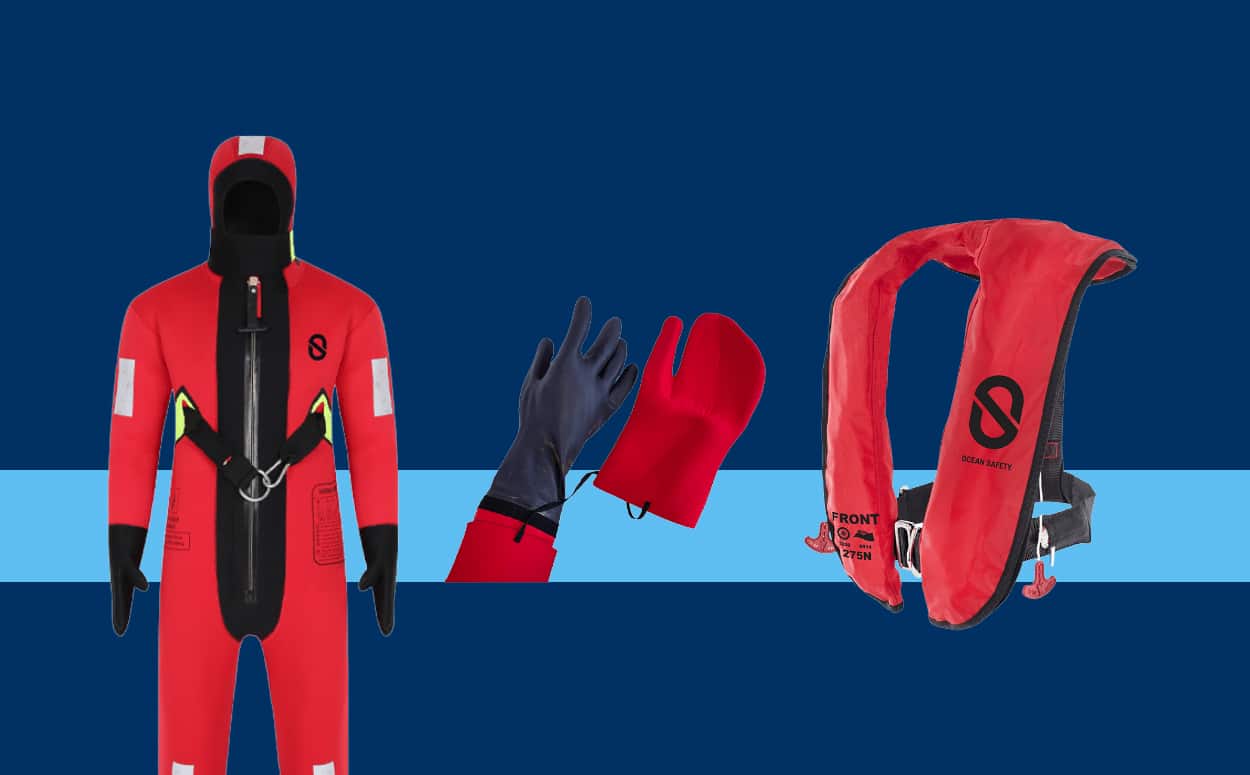
SAR operator equipment: PPE, wetsuits and safety systems for Search and Rescue missions
The first component is PPE. In SAR, these are not items standardised in the abstract, but tools selected according to the scenario. In maritime, riverine or flood environments, professional dry suits and wetsuits serve first and foremost to contain heat loss. This is a critical factor, because cold impairs mental clarity, tactile sensitivity and precision of movement. A well-designed suit extends the effective intervention window, improves mobility and protects the operator during dives, time in the water or prolonged recoveries. Reinforcements, heavy-duty zippers and technical pockets add practical functionality, allowing tools and accessories to be carried without hindering the operation.
Alongside this protection come high-visibility life jackets. In water or maritime rescue, the life jacket does not merely provide buoyancy: it must stabilise the body, facilitate recovery and keep the operator visible in rough seas, low light or heavy rain. Fluorescent colours, reflective tape, attachment points and ergonomic configurations affect safety because they help the team locate the rescuer immediately and coordinate manoeuvres more effectively.
The certified protective helmet completes the first line of defence. In SAR it must absorb impacts, resist strikes and protect across very different environments: on board, in the water, on rough terrain or during vertical operations. At the same time, it cannot restrict vision, mobility or communication. That is why many models integrate mounts for lamps, visors and radio equipment, turning the helmet into an operational and protective platform.
Technical gloves and boots play a decisive role. Gloves must protect against cuts, abrasions, cold and moisture, while retaining the sensitivity needed to grip ropes, carabiners, rescue knives or communication devices. Boots improve insulation, stability and grip, especially on wet, slippery or unstable surfaces. Together they help preserve precision and control — two non-negotiable conditions when working close to a casualty or in high-risk areas.
SAR rescue safety: harnesses and technical clothing for complex operations
When the mission requires recoveries at height, along embankments, cliff faces or complex structures, rescue harnesses and descent / hoisting systems come into play. Here personal safety is directly tied to the quality of the manoeuvre. An adequate harness correctly distributes the load, reduces stress points and allows controlled movement even while suspended. In more technical recoveries, this equipment becomes essential not only to protect the operator, but also to prevent further trauma to the casualty.
Technical clothing also plays a more strategic role than it might appear. One often-overlooked aspect is the mutual compatibility between components. A suit that is too rigid limits harness use; a poorly configured jacket interferes with radio, knife or attachment points; an ergonomically poor helmet obstructs the headset, visor and lighting. In SAR, protection truly works only when every element is designed to coexist with the others, without creating bulk or delays during the manoeuvre. This is also why equipment selection requires testing, training and field verification, not merely regulatory compliance. Windproof, waterproof and thermal layers, breathable fabrics, ergonomic cuts and high-visibility garments improve comfort, recognisability and performance endurance. In SAR, staying dry, visible and free to move means reducing error and increasing efficiency.
In conclusion, when it comes to the personal safety of SAR operators, the product alone is not enough. Suits, life jackets, helmets, harnesses, gloves and boots must be selected in a way that is consistent with the operational scenario, the type of mission and the level of risk exposure. This is precisely where Avioconsulting comes in: not merely as a supplier of Search and Rescue equipment, but as a partner capable of guiding the customer in selecting the most suitable products. The company’s strength lies in the consulting that accompanies the sale, helping the client build an equipment set-up that is truly functional, balanced and reliable, in both the aviation and maritime fields. In an industry where every component must integrate with the others without leaving any margin for uncertainty, the value is not simply in having the right products in the catalogue, but in knowing how to identify, for each partner, the configuration best suited to the mission.