
Search & Rescue: interoperability and reliability in complex scenarios
Search & Rescue (SAR) responds to a universal imperative: reducing the distance between an emergency and an effective response. Whether it is an incident in open waters or along an air route, the objectives remain the same: locate, communicate, coordinate and recover in the shortest possible time.
Today, SAR is a coordinated system that integrates procedures, training and technological systems, based on an often underestimated capability: reliability. Because when needed, the system must function without uncertainty.
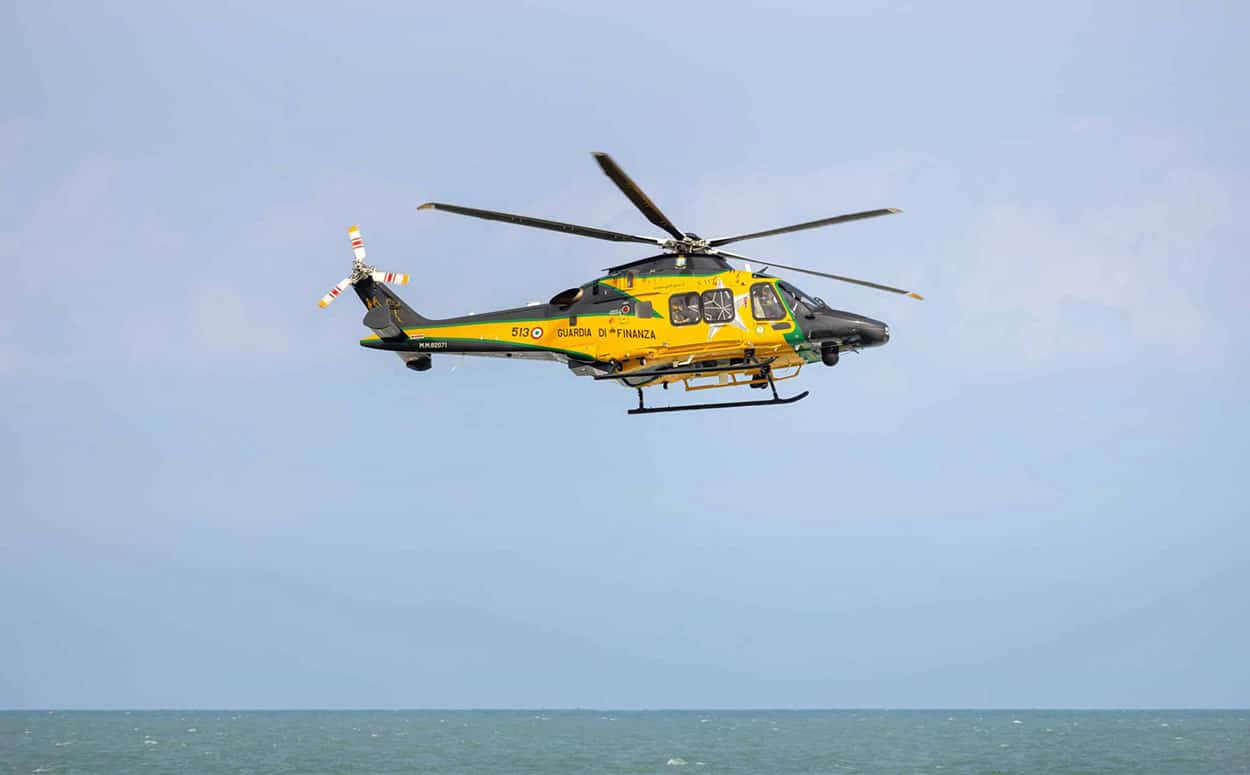
Within military operations, this requirement is further amplified.
SAR is not just an emergency function: it is an operational capability that safeguards mission continuity, reduces strategic risk and protects personnel in potentially hostile environments. However, compared to non-military contexts, the constraints and priorities differ fundamentally: threat assessment, operational security, interoperability, rules of engagement, and robust command and control chains.
SAR and CSAR in the aeronautical and military maritime domains
In military aviation operations, typical scenarios encompass loss of contact, forced landings, ejection, accidents during training or operational deployment, and situations requiring crews to maintain operational capability whilst awaiting recovery in contested areas. The challenge extends beyond rapid localisation: it demands reliable information, a minimised vulnerability window and assured safety of all personnel engaged in the recovery operation.
In armed conflict scenarios, SAR evolves into CSAR (Combat Search and Rescue), where recovery takes place in contested environments with active threats. The complexity increases significantly: navigation, communications and extraction capabilities must be integrated with asset protection, threat management and real-time tactical coordination. In such contexts, configuration discipline and the quality of information flow are critical. Correct parameters, procedures aligned with operational dynamics, and rigorous management of variations due to asset rotations and tactical adaptations are the determining mission factors.
In the military maritime domain, SAR moves between environmental complexity and tactical complexity. Scenarios include man overboard, fires or critical events on board, navigation failures, patrol and surveillance activities on sensitive routes, support to task groups and amphibious units, and even operations near coasts where discretion is an operational factor.
The maritime environment demands technical and procedural resilience: exposure to salinity, physical impacts, capsizing, extreme temperatures and extended periods of inactivity.
In the military field, moreover, the SAR chain must be reliable but also controllable: orderly alarm management, traceability, compatibility with on-board systems and integration into C2 (command and control), without introducing friction or weak points. A system that is “ready on paper” is not enough: it must be ready in practice, even after months, and must remain effective under conditions of operational stress and degraded communications.
Avioconsulting's role in the operational cycle
In this context, Avioconsulting supports operators with a practical and structured approach, aimed at keeping equipment ready at all times, consistent with operational requirements and reliable over time.
Avioconsulting undertakes programming and reprogramming activities to ensure correct, up-to-date configurations aligned with the deployment scenario and operational changes throughout the asset lifecycle.
In critical contexts, this helps to reduce the risk of inconsistencies that can slow down intervention or generate ambiguity in coordination.
Inspection and maintenance throughout the entire life cycle. To guarantee and maintain product efficiency throughout their life cycle, Avioconsulting carries out inspection and maintenance activities aimed at preserving consistent performance, preventing degradation and minimising technical downtime.
The goal is to ensure real readiness: devices that, even after long periods of inactivity, are immediately effective when required.
Testing: product demonstration and verification testing. Avioconsulting carries out tests that include product demonstration and acceptance testing, verifying functionality and compliance with requirements. This step consolidates operational confidence, supports commissioning and strengthens technical traceability.
Supply of spare parts and components. Avioconsulting ensure the continuous availability of original spare parts and certified components, ensuring that equipment can be maintained in operational efficiency without interruption. Orderly after-sales management reduces downtime and preserves the long-term reliability of the system.
To summarise, SAR is fundamentally a race against time—one that is won before the emergency occurs, through clear procedures, reliable systems and genuine operational readiness.
Avioconsulting contributes to this readiness by providing operators with technical support and targeted activities to keep equipment efficient and consistent with the scenario of use, in compliance with the standards of the ISO 9001 Quality Management System.